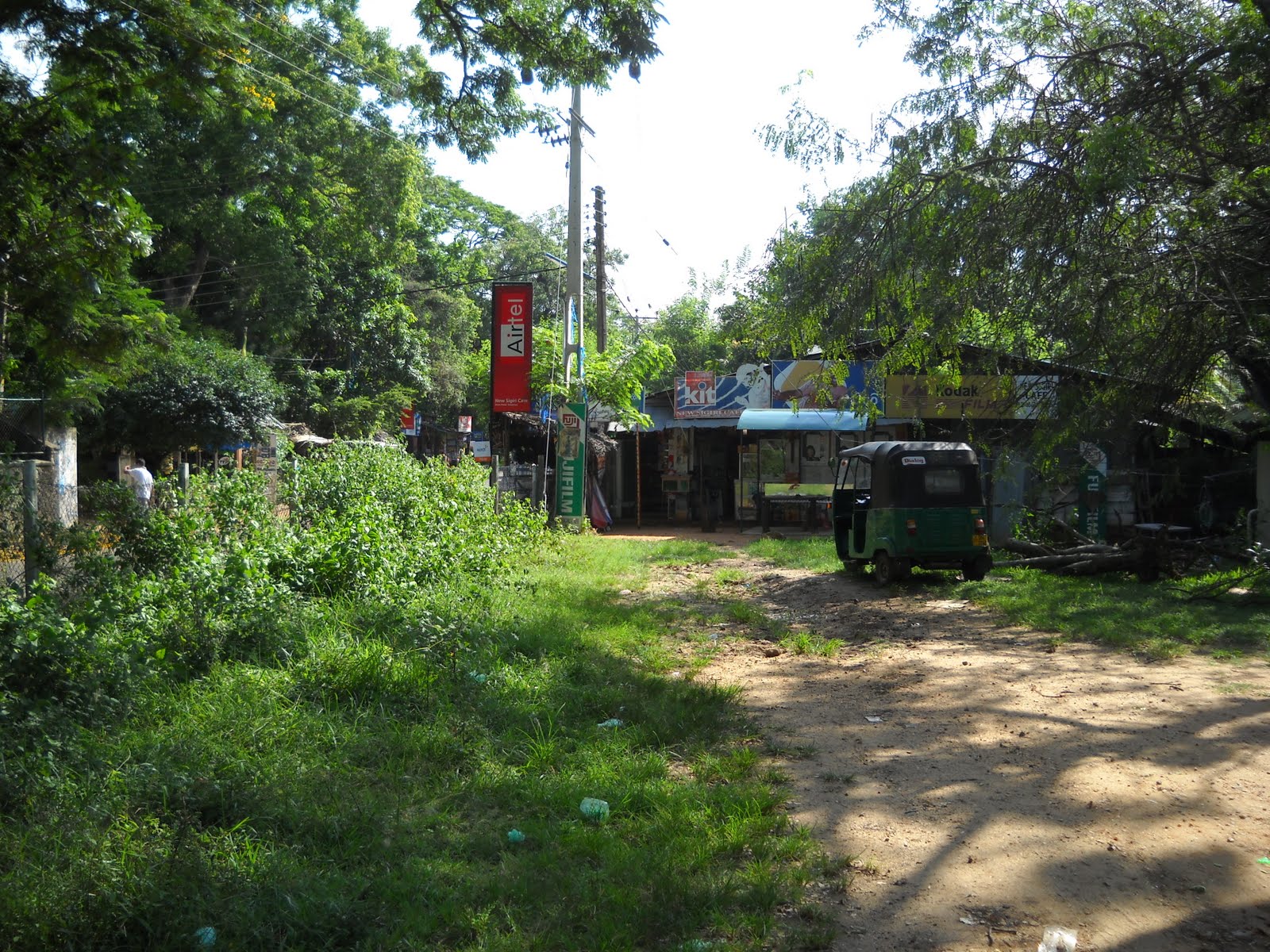
Approaching Sithalpahuwa we pass through an Army checkpoint. A remnant from the war, these checkpoints and outposts are still very common and active. They must have been a bit uncomfortable posts during the war as there is a definite sense of isolation in the wild.
The lower stupa and, I think, the older of two stupas at Sithalpahuwa. This was built it the 1st century CE. Seen from the top of the higher stupa.
The "newer" stupa built 3rd century CE. Oh, boy, another hill to climb!
Wednesday, May 19, 2010
Buduruwegala
In the second photo are three generations sitting before the statues. I can just hear the voice of the grandfather and see from their gestures and the children looking from grandfather to the images and tell he is telling about these carvings. The main carving before them is Avalokitesvara with his hands in the gesture or argument or debate of the Dhamma. Perhaps the grandfather is not only telling the story of the carvings, but instructing his grandchildren and there are many generations from Avalokitesvara to these young Sri Lankans.
Maligawila
Maligawila is in the forest and there are not the typical extensive ruins of a monastery, stupa and shrines. Instead, there is this majestic statue of the Buddha. It is a wonderfully peaceful place in the cool forest.
About a kilometer away there is this old temple with a statue of a Boddhisattva. These trees were surely not present in the original temple, but they create a very peaceful setting today.
Intention
While posting some pics the other day I noticed something. During WanderAbout 2003 I got a good camera and took a bunch of pictures that tended to be focused on the quality of the photo and, as a result, I have a bunch of pictures in my rotating screen saver that I really like irrespective of the memories they may hold.
Now in Sri Lanka, I got an inexpensive snapshot camera with the intention of capturing and sharing some of my experience. The camera can actually produce some pretty good pictures, I just don't have real control over aperture, shutter speed, the ability to control pushing ISO, or the variation of focal length that helps so much with framing. Yet, what I noticed is that these pictures merely capture scenes; with few exceptions, they have no aesthetic quality.
The real difference is mostly a subtle change in intent which infected the mind and thoroughly changed the results. The difference is in perspective and intention, and the interest their effect on expression and outcome. The difference is in Right View and Right Intention, and the interest is their effect on Right Speech and Right Action.
Oh, mindfulness, where are you?
In western culture, a father may bring his newborn before the cross and speak to Jesus, to God, saying "this is my child, bless this infant with health and a happy life". Here, a Buddhist father brings his newborn before a statue of the Buddha and I watched as he spoke not to the Buddha, but to his child. I imagine his words, "this is the Buddha, his teaching will guide you in life. Here you will find freedom from suffering; this is the path to happiness."
Or maybe that is just my romantic side. ;)
Now in Sri Lanka, I got an inexpensive snapshot camera with the intention of capturing and sharing some of my experience. The camera can actually produce some pretty good pictures, I just don't have real control over aperture, shutter speed, the ability to control pushing ISO, or the variation of focal length that helps so much with framing. Yet, what I noticed is that these pictures merely capture scenes; with few exceptions, they have no aesthetic quality.
The real difference is mostly a subtle change in intent which infected the mind and thoroughly changed the results. The difference is in perspective and intention, and the interest their effect on expression and outcome. The difference is in Right View and Right Intention, and the interest is their effect on Right Speech and Right Action.
Oh, mindfulness, where are you?
In western culture, a father may bring his newborn before the cross and speak to Jesus, to God, saying "this is my child, bless this infant with health and a happy life". Here, a Buddhist father brings his newborn before a statue of the Buddha and I watched as he spoke not to the Buddha, but to his child. I imagine his words, "this is the Buddha, his teaching will guide you in life. Here you will find freedom from suffering; this is the path to happiness."
Or maybe that is just my romantic side. ;)
Sunday, May 16, 2010
Landscapes

More buffalo. Because I like the way such big beasts hunker down in the water and then just sort of stare at you with an incredibly bland expression.

Strange effect from this night shot. This large elephant is actually about 15-20 yards away drinking from some kind of well. The two Sri Lankan men with me were a bit nervous; of course, not knowing any better, I was having a grand time.
It turns out elephants tend to stay hidden in the woods during the day and come near or into populated areas at dusk and return to the forest at dawn. Around Sigiriya, where this was taken, tourists are advised to not go walking at night, even around the village, because wild elephants can be dangerous. The only menacing elephants I saw were bothered that a some people in a jeep got too close to their baby and they charged to drive them away. While elephants are certainly huge and I don't feel like running up and petting one, it seems to me they are like most wild animals: not horribly dangerous unless you threaten them, scare them, or just plain piss them off.
Subscribe to:
Posts (Atom)